
How Shopify Agentic Storefronts Could Transform AI-Powered Shopping
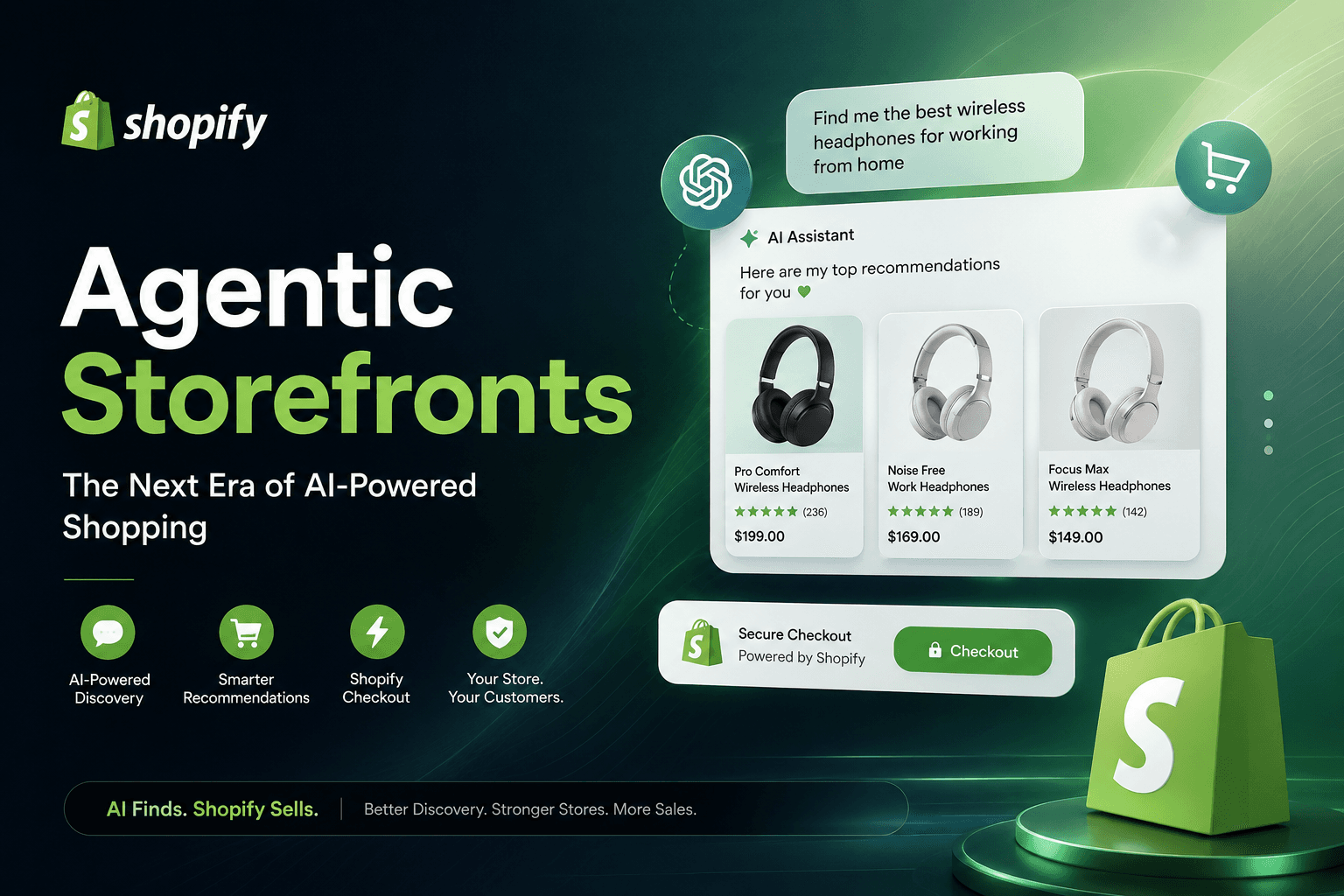
𝗦𝗵𝗼𝗽𝗶𝗳𝘆 𝗔𝗴𝗲𝗻𝘁𝗶𝗰 𝗦𝘁𝗼𝗿𝗲𝗳𝗿𝗼𝗻𝘁𝘀: 𝗣𝗿𝗲𝗽𝗮𝗿𝗶𝗻𝗴 𝗳𝗼𝗿 𝘁𝗵𝗲 𝗡𝗲𝘅𝘁 𝗘𝗿𝗮 𝗼𝗳 𝗔𝗜 𝗖𝗼𝗺𝗺𝗲𝗿𝗰𝗲
For years, ecommerce growth has revolved around three major channels: search engines, social media, and online marketplaces.
Today, another channel is emerging— 𝗔𝗜-𝗽𝗼𝘄𝗲𝗿𝗲𝗱 𝘀𝗵𝗼𝗽𝗽𝗶𝗻𝗴 𝗮𝘀𝘀𝗶𝘀𝘁𝗮𝗻𝘁𝘀.
With Shopify introducing Agentic Storefronts, the shopping journey is beginning to move into conversations with AI platforms such as ChatGPT, Gemini, and other intelligent assistants. Instead of browsing dozens of product pages, customers may simply ask an AI which product best fits their needs and receive personalised recommendations instantly.
This isn't just another feature update. It represents a fundamental shift in how products are discovered online.
---
𝗪𝗵𝗮𝘁 𝗔𝗿𝗲 𝗦𝗵𝗼𝗽𝗶𝗳𝘆 𝗔𝗴𝗲𝗻𝘁𝗶𝗰 𝗦𝘁𝗼𝗿𝗲𝗳𝗿𝗼𝗻𝘁𝘀?
Agentic Storefronts are designed to make Shopify stores more accessible to AI assistants.
Rather than relying solely on keyword searches, AI can understand structured product information, compare options, answer customer questions, and guide purchasing decisions through natural conversations.
The customer journey becomes simpler:
- Ask an AI assistant for recommendations.
- Receive personalised product suggestions.
- Complete the purchase using Shopify Checkout.
For merchants, this means AI becomes a new discovery layer while Shopify continues to power the transaction.
---
Why This Matters for Ecommerce Businesses
Most ecommerce strategies today focus on improving visibility in Google Search, running paid advertising campaigns, or building audiences through social media.
AI introduces an entirely new way for customers to discover products.
Instead of searching for "best ergonomic office chair," a shopper may ask:
"Which ergonomic office chair is best for someone working from home for eight hours a day?"
The AI's ability to recommend your product depends on how well your catalogue communicates product information.
Stores with structured, informative, and trustworthy data will have a significant advantage.
---
Your Product Catalogue Becomes Your Competitive Advantage
Preparing for AI commerce starts with your catalogue.
Merchants should evaluate whether their store provides enough context for AI systems to confidently recommend products.
Key areas include:
Clear Product Titles
Avoid vague or keyword-stuffed titles. Product names should accurately describe what the item is and who it's for.
Helpful Product Descriptions
Descriptions should answer genuine customer questions rather than focusing only on marketing language.
Well-Structured Variants
Colour, size, material, and other product options should be organised consistently so AI can distinguish between them.
Rich Product Attributes
Specifications, dimensions, compatibility, pricing, and availability all improve AI understanding.
---
Shopify Checkout Remains the Conversion Engine
One of the most important aspects of Shopify's approach is that purchases remain within Shopify Checkout.
This means merchants continue to own:
- Customer relationships
- Conversion data
- Order history
- Marketing insights
- Post-purchase experiences
AI may influence discovery, but your Shopify store remains where trust is established and transactions are completed.
---
What Merchants Should Do Today
Businesses don't need to rebuild their stores overnight.
Instead, begin preparing by:
- Reviewing product titles for clarity.
- Improving product descriptions with useful buying information.
- Cleaning up product variants and attributes.
- Highlighting best-selling products.
- Ensuring product information is complete and accurate.
These improvements benefit not only AI recommendations but also SEO, accessibility, and overall user experience.
---
𝗙𝗶𝗻𝗮𝗹 𝗧𝗵𝗼𝘂𝗴𝗵𝘁𝘀
AI-powered shopping is no longer a future concept—it's becoming part of the ecommerce landscape.
Shopify Agentic Storefronts demonstrate that product discovery is evolving beyond traditional search into intelligent conversations.
The brands that succeed won't simply appear in AI responses.
They'll be the businesses that provide clear, structured, and trustworthy information that AI can understand and customers can confidently purchase.
The next storefront may begin with a conversation.
But successful ecommerce will still depend on delivering an exceptional checkout experience.
Comments & Queries
Ask a question or share feedback. Comments are moderated before publishing.
No approved comments yet.
Previous
Key AI SEO: Why Automated ALT Text, Rich Snippets & LLM-Friendly Schema Matter for Ecommerce
Next
AI Traffic Without CRO Is Just Expensive Analytics
Related Posts
Shopify Developer for Ongoing Store Setup and Support | Techlyser
Scaling an online store requires continuous technical refinement. Learn how dedicated ongoing Shopify development optimizes site performance, eliminates technical debt, and drives higher conversions.
How to Turn a Basic Online Store Into a Premium Brand
Discover how to transition your ecommerce store from a generic commodity catalog into a high-margin, premium brand experience through custom design and performance.
How to Get Your Shopify Store Discovered by ChatGPT and AI Search
Learn how to optimize your Shopify store for Generative Engine Optimization (GEO) to ensure ChatGPT, Perplexity, and Gemini recommend your products.