
Next.js Headless Shopify Development in India: When It Pays Off
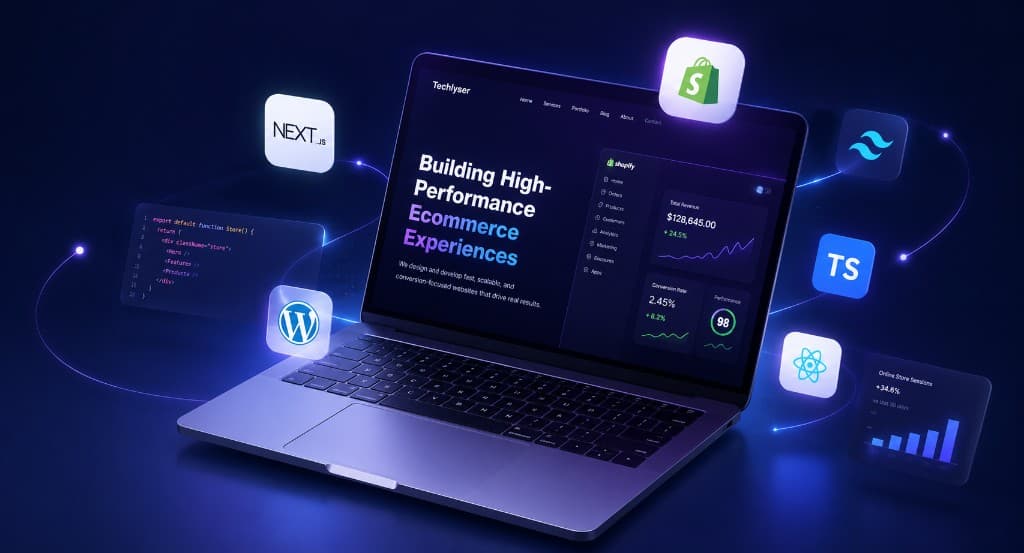
Headless Shopify means Shopify remains the commerce engine — cart, checkout, inventory, admin — while your storefront is a custom frontend, often Next.js.
Done well, headless unlocks UX freedom and performance control. Done poorly, it creates a slower, more expensive store that ranks worse than a clean Liquid theme.
This guide is for brands evaluating a Next.js development company in India for headless commerce.
Also see: Shopify Developers India · Shopify vs WooCommerce 2026 · Free Resources
When headless Shopify is worth it
Headless tends to pay off when you need at least two of these:
- UX that Liquid sections cannot cleanly express (complex configurators, account portals, content apps)
- Unified brand experience across marketing site + store
- Extreme performance budgets with strict engineering ownership
- Multi-team product org (design system, frontend, backend)
- Experimentation velocity that outgrows theme deploy cycles
If you mainly need a prettier theme, don’t go headless. Hire for a conversion rebuild instead — see Shopify development.
When to stay on Online Store (Liquid)
- Catalog-led merchandising with Shopify’s native editor
- Lean team without frontend engineers on staff
- Timeline under ~8 weeks to launch
- Budget better spent on ads, creative, and CRO
A senior Liquid theme + app discipline beats a junior headless build every time.
Next.js vs Hydrogen (practical view)
| Approach | Strength | Trade-off |
|---|---|---|
| Next.js App Router | Flexibility, SEO patterns, marketing + commerce in one app | You own more plumbing |
| Hydrogen / Remix-oriented | Shopify-first commerce primitives | Ecosystem/tooling choices differ |
| Liquid OS 2.0 | Fastest path, merchant autonomy | UX ceiling |
Techlyser uses Next.js App Router when brands need a product-grade web app with commerce — not only a theme clone.
SEO myths about headless ecommerce
“Headless can’t rank”
False. With SSR/SSG, correct metadata, XML sitemaps, canonicals, and crawlable product HTML, headless can rank as well as Liquid — sometimes better.
“Client-side React is enough”
False. Pure CSR storefronts struggle with crawlability and LCP. Prefer Server Components + streaming where appropriate.
“Schema is automatic”
False. You must implement Product, Breadcrumb, Organization, and FAQ JSON-LD deliberately — the same discipline we use on techlyser.com.
Delivery blueprint Techlyser uses
- Commerce IA — collections, PDP modules, account, content
- Design system — tokens, components, accessibility
- Data layer — Storefront API, caching, ISR/revalidate strategy
- SEO foundation — metadata, sitemap, robots, structured data
- Checkout handoff — Shopify checkout (hosted) with analytics continuity
- Perf budget — LCP owners, image pipeline, script policy
- Launch + observability — Core Web Vitals monitoring
Cost & timeline expectations (India)
| Scope | Typical range |
|---|---|
| Headless MVP (core templates) | 8–12 weeks |
| Full brand + commerce app | 12–20+ weeks |
| Investment band | Significantly above a Liquid rebuild |
Ask vendors for demos of real headless Shopify — not marketing sites with a cart widget.
FAQs
Is Techlyser a Next.js development company in India?
Yes. We build App Router applications, headless Shopify storefronts, and performance-focused marketing sites. Start at /services/nextjs.
Can we migrate from Liquid to headless later?
Yes — if the theme was built with clean commerce modeling. We often stage headless behind a phased PDP/collection rollout.
Does headless replace Shopify Plus?
No. Plus and headless solve different problems. Read Shopify Plus vs Shopify.
Next step
If you are unsure whether headless is ROI-positive, book a Free Shopify Growth Audit. We’ll tell you honestly if a Liquid rebuild is enough — or if Next.js is the right next chapter.
Previous
Shopify vs WooCommerce for Indian D2C in 2026
Next
Shopify Plus vs Shopify for Indian Brands: When to Upgrade
Related Posts
Scalable Ecommerce Architecture & Performance Guide
shopify: Discover how eliminating app bloat, optimizing Core Web Vitals, and refining mobile UX can transform your online store into a high-converting revenue e
Scaling Shopify Stores: Architecture, Speed & CRO Guide
Scaling an ecommerce brand requires moving beyond basic themes and app sprawl. Discover how disciplined Shopify architecture and performance engineering drive
Custom Shopify UX Strategy: Scaling Beyond Templates
Standard Shopify templates can limit your brand's growth and conversion rate. Discover how moving to a custom, performance-first UX architecture improves Core